
 Translate
Stormwater facilities
What are stormwater facilities?
Stormwater facilities are constructed to carry storm and rain runoff, remove pollutants, control the flow of water and slow water to allow rain to soak into soil. Stormwater facilities can be pipes, ditches, swales (a shallow ditch), filters, ponds, underground tanks and vaults.
These facilities help prevent flooding and erosion. They protect clean water and water quality by filtering and removing sediments, nutrients and toxic chemicals.
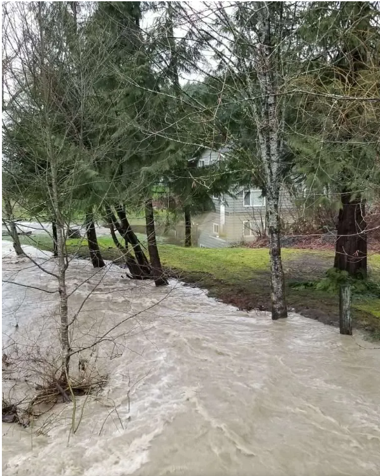
Flooding on Issaquah Creek in 2020
There are two main types of facilities, those that control stormwater flow and those that help clean and maintain water quality.
Controlling stormwater flows
Rainstorms can create fast, high flows that cause flooding in developed areas. A flow control facility is designed to capture, store, and slowly release stormwater runoff downstream or into the ground. These facilities include ponds, underground tanks and vaults, and infiltration systems. These facilities work by detention or retention of rainwater flows.
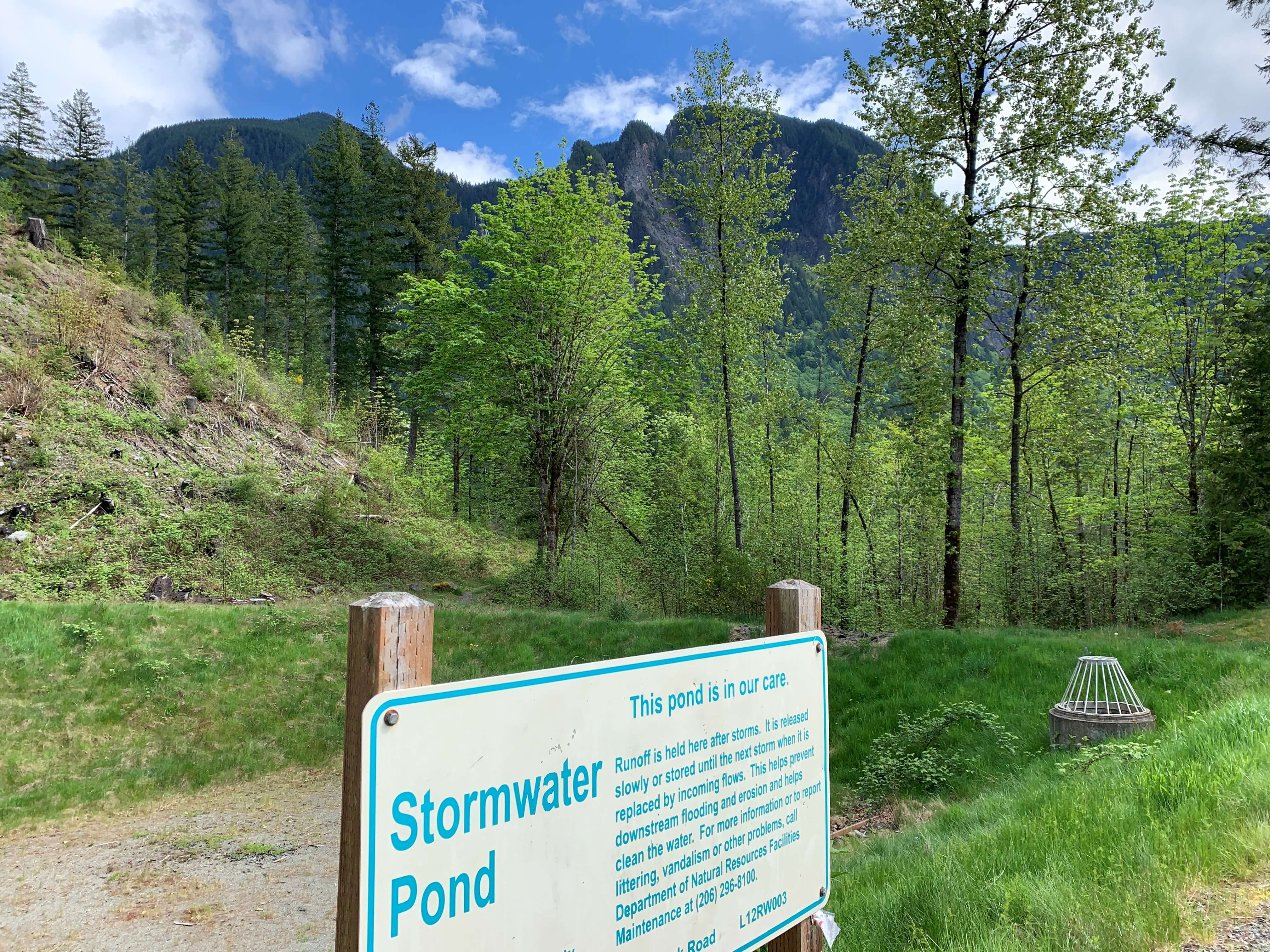
Stormwater facility in North Bend that shows a retention pond, a pond that allows slow filtration of water into soil and is dry when not collecting rainwater.
Detention ponds store stormwater runoff to slowly release it downstream and can be combined with water quality treatment ponds. Those ponds store water on a permanent basis.
Retention, or infiltration, ponds collect stormwater and allow water to soak into the soil. Infiltration tanks or pipes are located underground and release water into the soil to be absorbed. This helps filter and recharge groundwater.
Underground tanks and vaults act like detention ponds. Rainwater from storms are stored in these facilities and slowly released downstream. Tanks and vaults are often located in places like a road right-of-way, parking lots, and easements on private property.
Cleaning and maintaining water quality
Water quality facilities keep water clean by removing pollutants and settling out soils. Water quality facilities are often combined with flow control facilities. Water quality facilities include, vegetated swales, settling ponds or vaults, sand filters, compost filters, oil-water separators and constructed wetlands.
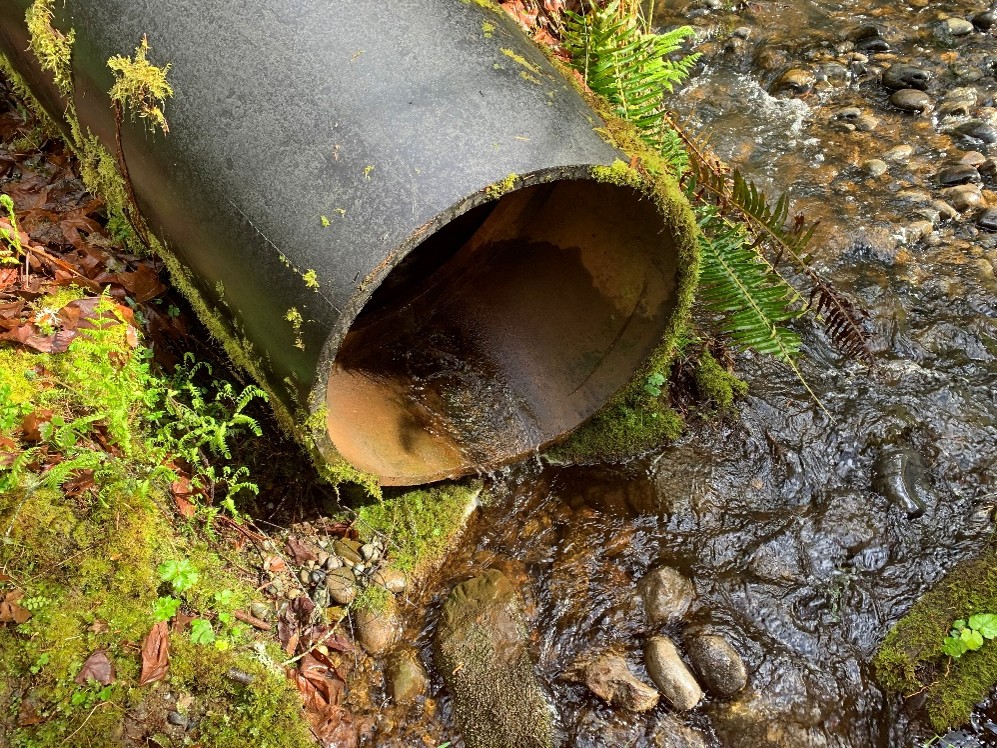
Stormwater pipe at low rainfall flowing into a stream.
The challenges of stormwater runoff
Many of our actions change how water soaks into the ground. Cutting down trees, clearing land, paving roads and parking lots, and constructing buildings all affect runoff.
With these changes, rain has fewer places to soak into the ground and pools and collects on hard surfaces more quickly. This can increase runoff, adding to flooding, erosion, and water pollution. With faster runoff, there is risk of damage to property, stream habitats and flooding.
Who maintains stormwater facilities?
King County owns and maintains many stormwater facilities in unincorporated King County. We maintain facilities located on road right-of-way and county-owned tracts. These facilities mostly serve public roads and single-family subdivisions.
Stormwater facilities on private properties like multi-family and commercial developments are often privately owned and maintained.
For information on maintaining facilities on private property, go to Stormwater drainage facility maintenance - King County, Washington