
 Translate
Preparing the wastewater system for climate change
King County’s regional wastewater system protects public health and the environment. Climate change is creating more challenges. We are planning ahead to keep this essential service safe and reliable.
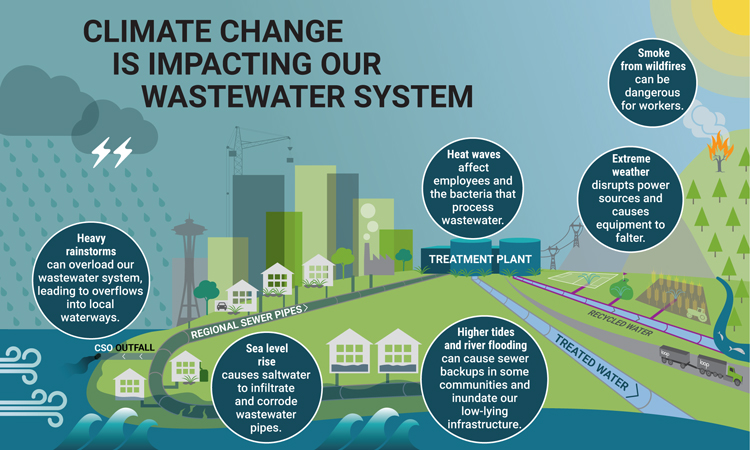
Climate change is already affecting how the wastewater system works. This includes impacts like:
- More water in the system – Heavier rain and sea level rise can send more water into our pipes. This can cause overflows or backups into homes and streets.
- Flooding at our facilities – Flooding can damage equipment at our facilities. It can also make it harder for staff to access these sites.
- Impacts to health and safety of our staff – Extreme weather can put our staff at risk. It can expose workers to unsafe conditions.
- Problems with treatment and odors – High heat can harm the helpful bacteria we use to clean wastewater. Sustained high heat can also lead to more odors and corrosion in our collection system.
- Power disruptions – Storms and extreme conditions can cause power outages at our facilities.
These impacts can put added stress on our facilities, staff, and the communities we serve. The risk of service disruptions, flooding, or sewer backups may become more frequent and lead to higher costs over time. The Climate Adaptation Planning Program aims to reduce these risks. Together, we plan improvements to keep the system running safely and reliably.
The King County Wastewater Treatment Division develops solutions to help the regional system adapt to future conditions. We use climate science to understand how climate change may affect our system. We identify where the system is most at risk and what to do about it. We work with engineers, plant operators, and other experts. We also estimate the cost of these upgrades so we can plan ahead.
What we're working on
Climate preparedness planning
As our region faces more extreme weather, WTD is planning to improve climate resilience and protect our system from climate-related risks. We are starting work on our first long-term climate adaptation plan. It will guide us on how we prepare projects to better handle climate impacts.
Library and resources
Below you can find reports and studies related to this program. There are also other technical resources.
These climate science resources and tools describe projected climate hazards and their impacts. King County has participated in the development of this information.
- CoSMoS Modeling Tool
This tool uses computer models to study future climate conditions. It helps us plan for sea level rise, flooding, and coastal impacts. - Duwamish Groundwater Study
This study looks at groundwater conditions in the Duwamish area. It helps us understand how groundwater affects the wastewater system.
These assessments identify parts of the wastewater system that face risks from climate change. They help us decide where to focus on upgrades and investments.
- Saltwater Intrusion in the West Point System (2025)
This report examines how saltwater can enter wastewater pipes. It explains why this matters and how it can affect system performance. - CSO Climate Change Preparedness (December 2021)
This report shares what King County learned from other wastewater utilities. It explains how other utilities prepare their combined sewer overflow systems. King County uses these lessons to plan improvements to our own CSO system. - Modeling of Possible Future Climate Change Scenarios (October 2021)
King County used computer models to study future rainfall. The models show how this could affect the CSO system. The models look at conditions between 2070 and 2099. Results show the system may need to handle much more overflow to meet current rules. - Sea Level Rise Assets Report (September 2021)
This report identifies County facilities most at risk from rising sea levels. These include roads, treatment plants, and other critical assets.