
 Translate
Streams monitoring
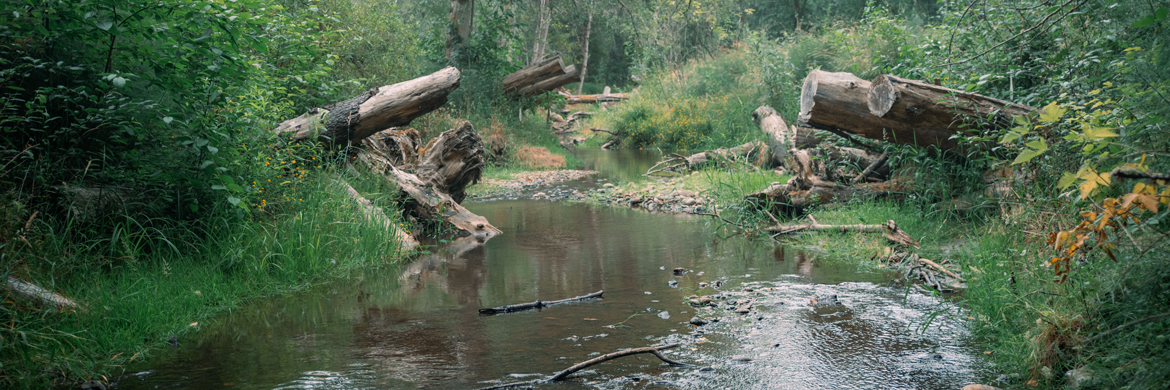
Stream ecosystems serve many critical roles that benefit people, wildlife, and the environment. They help with flood control and serve as a source of drinking water. They provide opportunities for fishing, swimming, and other outdoor activities. They also provide important habitat for plants and animals, including salmon.
In the Stream and River Monitoring Program, we monitor water quality in 82 stream and river locations across the county each month. These streams range from small urban creeks to larger forested rivers and help us understand the impacts of various pollutants and human activities.
About the stream monitoring program
Continued ongoing monitoring is important to understand if new problems are appearing that can impact water quality and thereby the health of people who use our regional waters. The long-term environmental impacts of all types of pollution that affect the quality of lakes and streams can only be evaluated by sampling at multiple sites throughout the watershed.
The data from the stream monitoring program are analyzed with the following objectives:
- Characterize the physical, chemical, and biological water quality conditions in King County streams
- Determine if applicable State and Federal water quality criteria are met
- Identify long-term water quality trends and their underlying causes
Parameters analyzed in the routine water quality samples include fecal coliform bacteria and conventionals:
- Temperature
- Dissolved oxygen
- pH
- Conductivity
- Turbidity
- Total suspended solids
- Nutrients (phosphorus and nitrogen)
Stream sediment quality monitoring and wet weather monitoring (targeted sampling for high flows after storms) began in 1987. Parameters analyzed in the sediments included heavy metals and organic contaminants such as pesticides. Both programs were cut in 2009.
The Benthic macroinvertebrate sampling program was added to the monitoring program in the 1990s and continues today. Once each year these insects are collected from many stream sites throughout the County. All benthic invertebrate samples collected in the region can be viewed on the Puget Sound Benthos web page.
Prior to the 1950’s, untreated wastewater flowed into Lake Washington, Puget Sound, and other waterways, polluting the water. In 1958, voters approved an initiative for the formation of the Municipality of Metropolitan Seattle (Metro). Metro had two responsibilities under the initiative. First, it would create a regional wastewater treatment system to treat the sewage. Additionally, it would monitor the waters receiving the treated effluent to ensure there were no harmful impacts.
Four wastewater treatment plants were constructed--at Renton, West Point, Carkeek Park, and Richmond Beach. The plants were up and running by 1966. Metro began monitoring temperature and bacteria levels in the Green River and Pipers Creek as part of the receiving water monitoring. These were the first monitoring sites of the present-day program.
In 1974, Metro was designated as the regional water quality planning agency. Metro's new responsibilities included regional water quality monitoring, long-term tracking, and planning. Over the next two decades, the program took many forms. King County assumed responsibility for the monitoring program in 1994, when Metro merged with King County.
The sampling strategies and the number of sampling sites have varied over time but the objective of tracking and maintaining water quality has remained.
- Through 2005, sites in the program were limited to WRIAs 8 and 9.
- In 2006, the WRIA 15 sites on Vashon Island were added.
- In 2009, budget constraints resulted in a significant decrease in monitoring program budget. The loss of funding resulted in a loss of nearly half of the monitoring sites, leaving only 32 sites.
- King County Council passed a Surface Water Management (SWM) fee increase beginning in 2011, funding twelve new sites in WRIA 7. Boise Creek, in WRIA 10, was also added in 2011.
- In early 2013 King County Council reinstated funding which resulted in the restoration of dropped sites and addition of new sampling sites.
Today, the program includes 82 sites across WRIAs 7, 8, 9, 10, and 15, monitored monthly.
Related programs
Major lakes monitoring
We monitor the water quality of King County's lakes to ensure their continued health, as well as the health of the public who utilize the lakes' many resources.
Benthic macroinvertebrate (stream bug) monitoring
King County tracks stream health by examining “stream bugs”, known by scientists as benthic macroinvertebrates. Learn about our sampling program, how we collect these bugs, and how we use the data.
Hydrologic Information Center
The Hydrologic Information Center provides public access to rainfall, streamflow and other hydrologic data collected at King County gage sites.
Swimming beach monitoring
During the summer, we test the water for bacteria at many lake beaches in King County. It's easy to find a healthy beach, and this website can help!
Other stream and river resources
- Washington State Water Quality Standards
- Seattle Public Utilities Shape Our Water Reports
- Snohomish County Ambient Monitoring Program
- Pierce County Watershed Health Monitoring Program
- Kitsap County Water Quality Monitoring Report
- Washington State Department of Ecology Stream and River Water Quality Monitoring