 Translate
Toxic algae

Toxic algae are cyanobacteria – also called blue-green algae. These microscopic aquatic organisms can produce toxins that are harmful to people and animals. Cyanobacteria occur naturally in waterways throughout the world, including lakes in King County. Not all cyanobacteria are toxic, and not all algae are cyanobacteria. There are also other common types of algae in our lakes that do not produce toxins.
King County scientists monitor and test lakes for toxic algae, which can make people and animals sick. We also work with Public Health – Seattle & King County to respond to toxic algae events and protect public safety.
Recent results for toxic algae testing
If any lakes in King County are currently experiencing confirmed toxic algae blooms, they will appear on the dashboard below. You can find more toxin analysis results from lakes and other water bodies around Washington State at www.nwtoxicalgae.org.
More information about toxic algae
What does toxic algae look like?
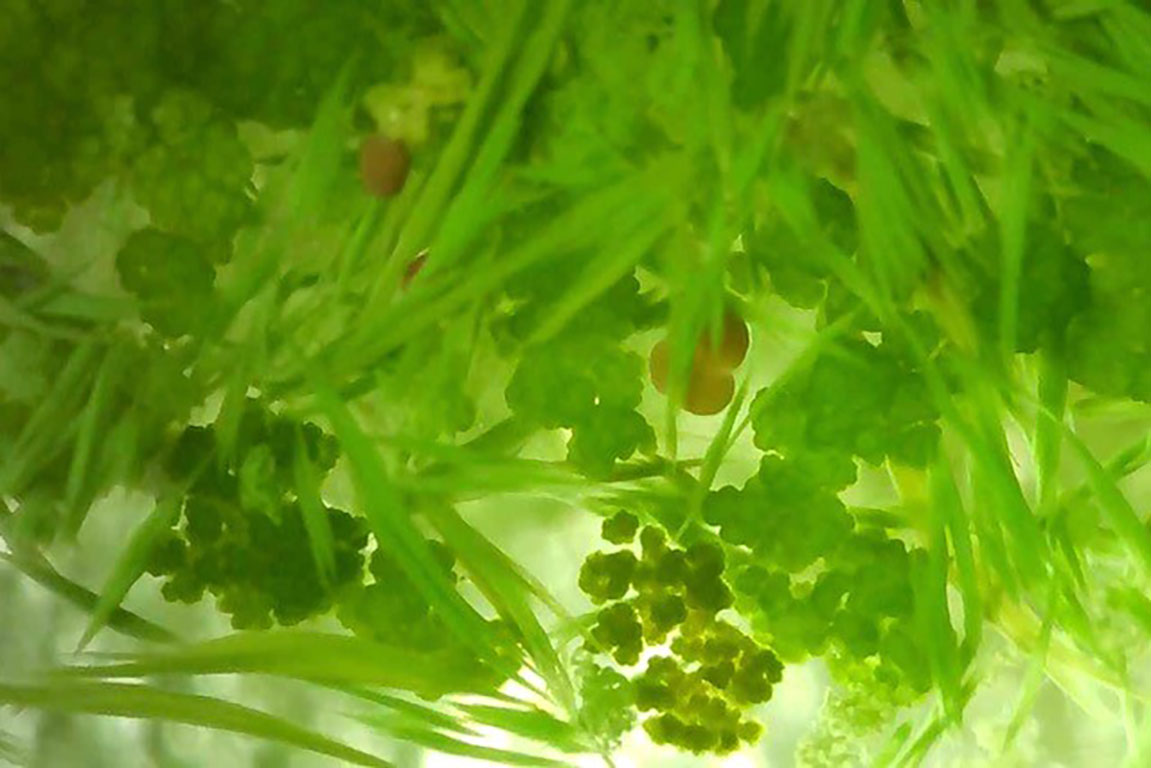
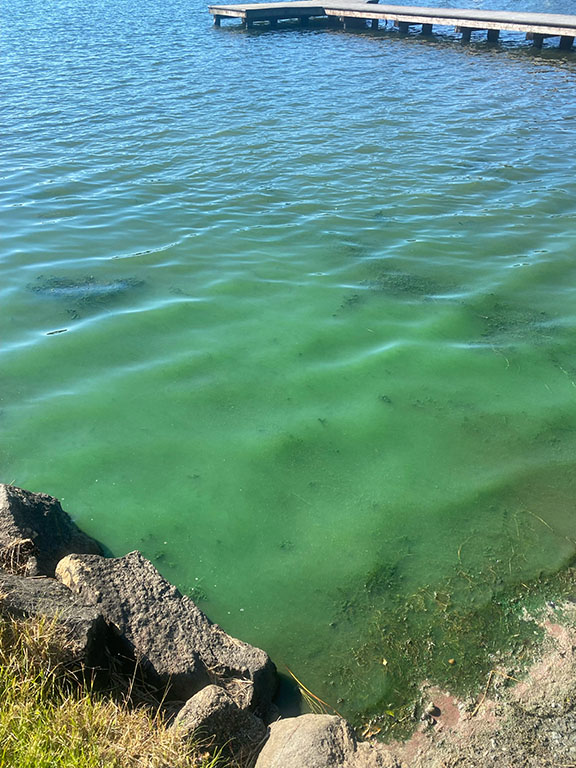
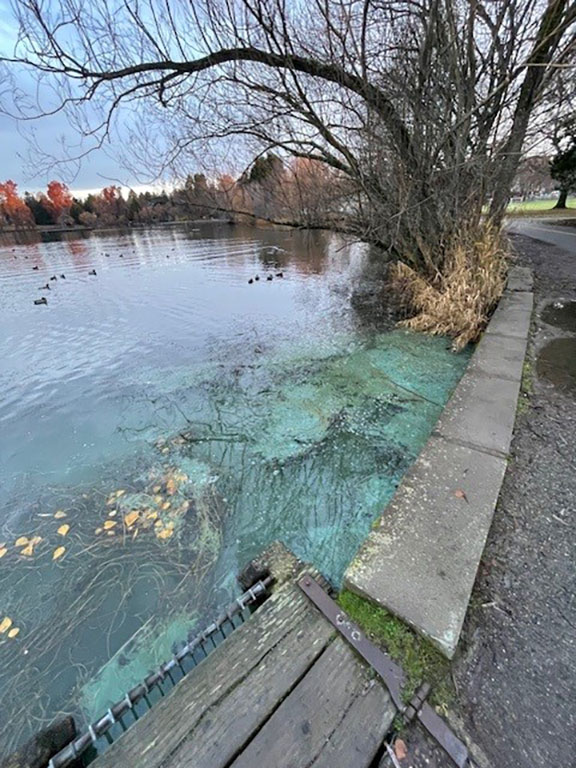
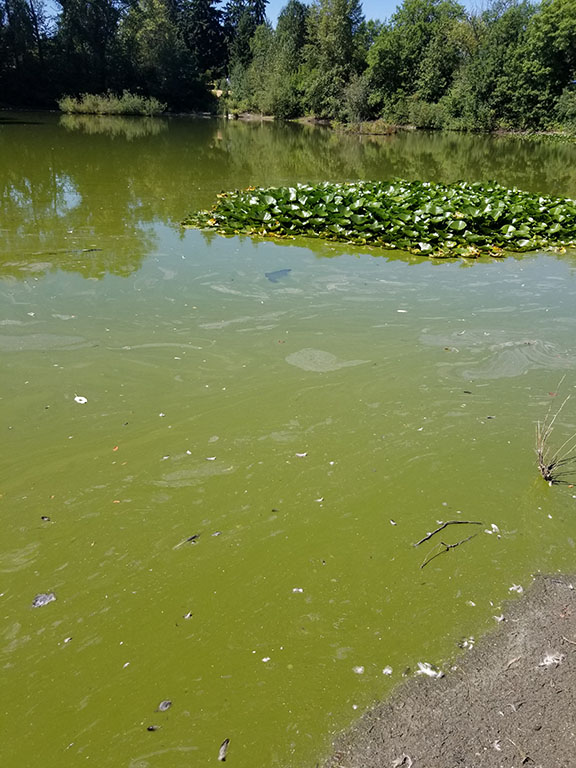
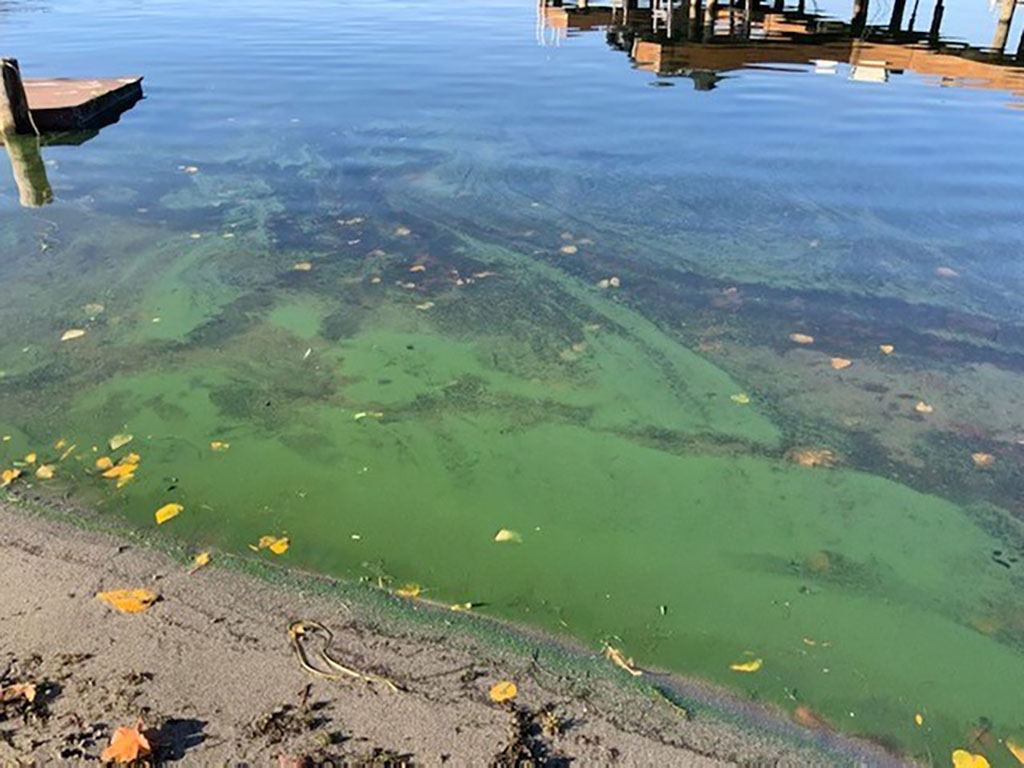
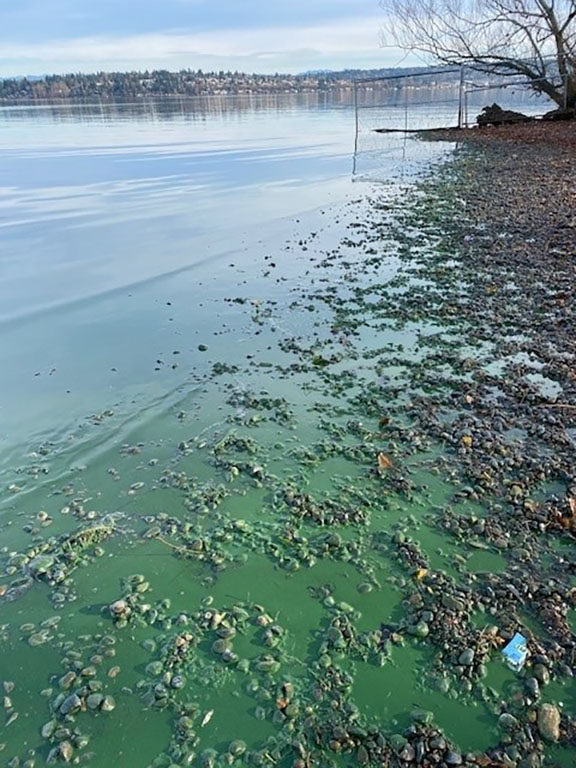
Cyanobacteria can be hard to identify just by sight, but there are some characteristics that are more common. The color may be green, olive, blue-green, or brown. The texture may appear filmy, cloudy, or clumpy, and may form streaks in the water or along the shoreline.
Typically it requires a trained eye to look at algae under a microscope to determine if it's cyanobacteria. Green algae blooms are common in King County and may be mistaken for cyanobacteria (blue-green algae). Other things that may look like cyanobacteria blooms include small plants, pollen, or golden algae (which does not produce toxins).
At-home testing
There are a couple of simple tests you can do at home to help determine if what you're seeing in the water might be cyanobacteria. Make sure to wear protective gear like gloves and glasses to avoid contact with potential toxins.
The quickest and easiest is the “stick test”. If there’s a surface mat or scum, poke a stick into the algae and lift it out. If the stick pulls up strands that look like green hair or thread, it’s probably non-toxic filamentous green algae. If the stick looks like you dipped it into paint, it might be cyanobacteria.
You can also try the “jar test”. If you collect some of the algae in a quart-sized jar and put it in the fridge overnight, non-toxic green algae will settle to the bottom, but cyanobacteria will float and form a ring at the top of the jar.
How dangerous is toxic algae?
People and pets should avoid drinking lake water, swimming or engaging in any other water-contact activities when toxic algae blooms are present. The primary way algae toxins enter the body is by swallowing contaminated water, but exposure can also occur through the skin, eyes, or by inhaling water droplets. Even brief contact with the water can be dangerous—especially for children and pets. Dogs are particularly at risk, as they may drink the water or lick algae off their fur after swimming, which can lead to serious illness or even death. To stay safe, always keep pets away from water when a bloom is suspected or confirmed.
Call your doctor or veterinarian if you or your pet have sudden or unexplained sickness or signs of poisoning.
What causes toxic algae?
Cyanobacteria can grow well in warm, nutrient-rich waters. Environmental factors like water currents, rain, sunlight, and wind can also affect how algae grow and spread. However, even if cyanobacteria are growing in a lake, they aren’t always producing toxins.
Scientists don’t know exactly what causes cyanobacteria to produce toxins, and testing is the only way to confirm that toxins are present.
Does toxic algae in a lake mean that the water is dirty or polluted?
No. The presence of algae- even toxic algae- does not mean the lake is polluted. It simply means that conditions like sunlight, temperature, and nutrient levels are favorable for algae to grow. Algae are a natural part of a lake ecosystem. They form the base of the food web and support fish and other aquatic life. However, too much algae can lead to blooms, which in turn may produce harmful toxins.
Think you see toxic algae?
If you think you see toxic algae in King County, email lakes@kingcounty.gov with descriptions or photos, or call 206-477-4800.
We help determine if what you're seeing in the water might be toxic algae and help you get the water tested if needed. The King County Environmental Lab, in partnership with the Washington State Department of Ecology, can test cyanobacteria blooms for the presence of some common algal toxins. And remember, "When in doubt, stay out!"